Back to Blog
Ev Chargers
Charging Up for a Wisconsin Winter: What Milwaukee EV Owners Need to Know About At-Home Charger Installation
Couillard Electric
0 views
As electric vehicle adoption grows in Milwaukee County, more homeowners are discovering the convenience of at-home charging. But winter weather brings unique challenges. Here's what you need to know about EV charger installation for Wisconsin winters.
# Charging Up for a Wisconsin Winter: What Milwaukee EV Owners Need to Know About At-Home Charger Installation
**Meta Description:** Planning to install an EV charger in Milwaukee? Learn what you need to know about at-home EV charger installation, electrical requirements, and winter charging tips from Couillard Electric.
**Excerpt:** As electric vehicle adoption grows in Milwaukee County, more homeowners are discovering the convenience of at-home charging. But winter weather brings unique challenges. Here's what you need to know about EV charger installation for Wisconsin winters.
---
Electric vehicles are becoming an increasingly common sight on Milwaukee County roads, and for good reason. They're environmentally friendly, cost-effective to operate, and offer a smooth, quiet driving experience. But if you're among the growing number of Milwaukee homeowners who've made the switch to electric, you've probably discovered that charging at public stations isn't always convenient—especially during our harsh Wisconsin winters.
Installing an at-home EV charger offers the ultimate convenience: you can charge your vehicle overnight in your own garage, wake up to a full battery, and never worry about waiting in line at a public charging station in sub-zero temperatures. However, proper installation requires careful planning, especially in Milwaukee's older homes and challenging winter climate. Here's everything you need to know about EV charger installation for your Milwaukee County home.
## Understanding Your EV Charging Options for Milwaukee Homes
Before diving into installation, it's important to understand the different types of charging available for residential use.
### Level 1 vs. Level 2 Charging: What's the Difference?
**Level 1 charging** uses a standard 120-volt household outlet—the same type you'd plug a lamp or phone charger into. While this option requires no special installation, it's painfully slow, typically adding only 3-5 miles of range per hour of charging. For Wisconsin winters, when cold temperatures can reduce your EV's range by 20-40%, Level 1 charging often isn't practical for daily use.
**Level 2 charging** operates on a 240-volt circuit (similar to what powers your electric dryer or oven) and requires professional installation by a licensed electrician. This is the sweet spot for most Milwaukee homeowners. A Level 2 charger can add 25-30 miles of range per hour, meaning you can fully charge most EVs overnight. During winter months when you're using more battery power for heating, this faster charging speed becomes essential.
### Popular EV Charger Models for Cold Climates
Not all EV chargers are created equal, especially when it comes to Wisconsin's temperature extremes. When selecting a charger for your Milwaukee home, look for models with:
- **Cold-weather ratings** down to at least -22°F (many quality chargers are rated to -40°F)
- **Durable, weatherproof enclosures** (NEMA 4 or higher rating for outdoor installations)
- **Smart charging capabilities** that let you schedule charging during off-peak hours or monitor usage from your phone
- **Adjustable amperage** to match your home's electrical capacity
Popular cold-climate models include the ChargePoint Home Flex, JuiceBox 40, and Tesla Wall Connector, all of which have proven reliable in harsh winter conditions.
## Electrical Requirements for Home EV Charger Installation
Installing an EV charger isn't as simple as mounting a box on your garage wall. Your home's electrical system needs to be able to safely handle the additional load.
### Does Your Panel Have Capacity?
This is the first question a qualified Milwaukee electrician will ask. Most Level 2 EV chargers require a dedicated 40-50 amp circuit. To put that in perspective, that's roughly equivalent to adding a second electric water heater to your home.
Many of Milwaukee County's beautiful older homes were built with 100-amp or 150-amp electrical panels—sufficient for the needs of decades past, but often stretched thin by modern demands. Add in electric heating, air conditioning, kitchen appliances, and now an EV charger, and you may be pushing your panel's limits.
**Signs your panel may need an upgrade:**
- Your panel is 100 amps or less
- Circuit breakers trip frequently
- You notice lights dimming when major appliances turn on
- Your home was built before 1980 and hasn't had electrical updates
- You're planning other major electrical additions (like a hot tub or home addition)
The good news? A panel upgrade isn't just about accommodating your EV charger—it's an investment in your home's safety, functionality, and value. Modern 200-amp panels provide plenty of capacity for current and future electrical needs.
### Dedicated Circuit Requirements
EV chargers must be installed on a dedicated circuit, meaning no other devices or outlets share that circuit. This is a safety requirement that prevents overloading and ensures reliable charging.
Your electrician will need to:
- Install a new circuit breaker in your panel (typically 40-60 amps)
- Run appropriate gauge wire from the panel to the charging location (usually 6 AWG or 8 AWG copper)
- Install proper conduit protection for the wiring
- Ensure proper grounding and GFCI protection
The distance from your electrical panel to your desired charging location matters. Longer runs require heavier gauge wire and increase installation costs. Ideally, your garage or charging location should be relatively close to your main panel.
## The Installation Process: What to Expect
### Working with a Licensed Milwaukee Electrician
While some handy homeowners might be tempted to tackle EV charger installation as a DIY project, this is one job that absolutely requires a licensed professional electrician. Here's why:
**Permits and inspections:** Milwaukee County requires electrical permits for EV charger installations. A licensed electrician will pull the necessary permits and ensure the work meets all local electrical codes. After installation, a city inspector will verify the work was done safely and correctly.
**Safety:** Working with 240-volt circuits is dangerous. Improper installation can lead to electrical fires, damage to your vehicle, or serious injury.
**Warranty protection:** Most EV charger manufacturers require professional installation to maintain warranty coverage.
**Insurance considerations:** Some insurance companies may deny claims related to electrical fires if work wasn't performed by a licensed electrician.
When you work with Couillard Electric, we handle the entire process from start to finish—permit applications, professional installation, inspection coordination, and final testing. Most installations are completed in 4-6 hours, and you can typically schedule your inspection within a few days.
### Choosing the Right Location
Where you install your charger matters for both convenience and longevity. Consider these factors:
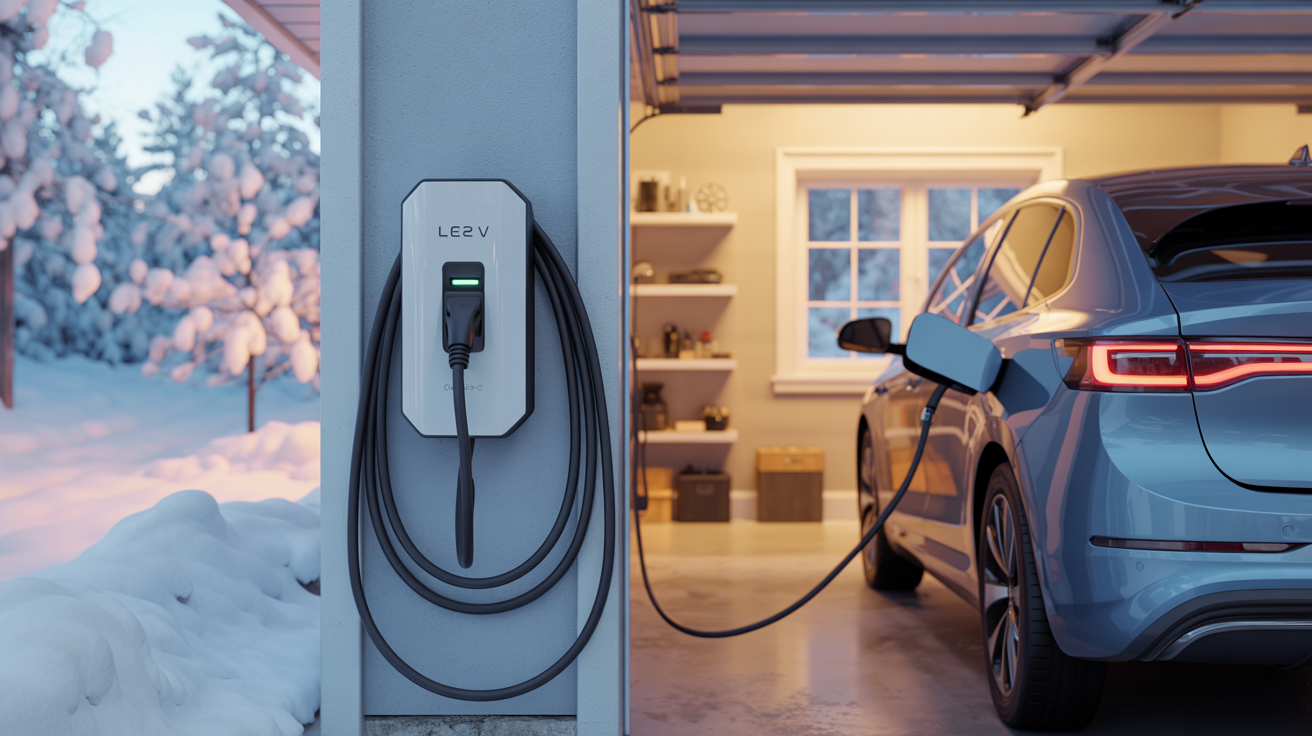
**Indoor vs. outdoor installation:** If you have an attached garage, an indoor installation is ideal. It protects the charger from the elements and makes winter charging more comfortable. However, many Milwaukee homes have detached garages or carports, making outdoor installation necessary. Quality chargers are designed for outdoor use, but you'll want to position them to minimize snow accumulation and ice formation.
**Cable length and reach:** Most EV chargers come with 18-25 foot cables. Consider where you typically park and ensure the cable can comfortably reach your vehicle's charging port without stretching or creating a tripping hazard.
**Future needs:** If you're considering a second EV in the future, discuss installing conduit for a second charger now, even if you don't install the second unit immediately. This can save significant costs down the road.
## Winter Charging Tips for Milwaukee EV Owners
Installing the charger is just the beginning. Here's how to optimize your charging experience during Wisconsin winters.
### Cold Weather Impact on EV Batteries
Lithium-ion batteries—the type used in all modern EVs—don't perform as well in extreme cold. When temperatures drop below freezing, you'll notice:
- **Reduced range:** Expect 20-40% less range in winter, depending on how cold it gets and how much you use the heater
- **Slower charging speeds:** Cold batteries accept charge more slowly
- **Increased energy use:** Heating the cabin uses significant battery power
The solution? **Preconditioning.** Most EVs allow you to schedule cabin heating while the car is still plugged in. This warms both the cabin and the battery using power from your home rather than the battery, preserving your range. Set your departure time, and your EV will be warm and ready when you are.
### Maintaining Your Charger in Wisconsin Weather
Your EV charger is built to withstand the elements, but a little maintenance goes a long way:
- **Keep it clear:** Brush snow away from the charger and ensure the cable isn't buried in snow or ice
- **Protect the connector:** When not in use, keep the connector holstered to prevent ice buildup in the plug
- **Check for ice:** Before plugging in, ensure there's no ice in your vehicle's charging port
- **Inspect regularly:** Periodically check the cable for any signs of damage, especially after severe weather
## Safety First: Important Considerations
Electrical safety should always be your top priority. Here's what every Milwaukee homeowner should know:
**GFCI protection:** Modern electrical codes require Ground Fault Circuit Interrupter (GFCI) protection for EV chargers. This safety device detects electrical faults and immediately cuts power, preventing shocks and fires.
**Proper grounding:** Your charger must be properly grounded to safely dissipate electrical faults. This is one reason professional installation is so important.
**Weatherproofing:** Outdoor installations require weatherproof enclosures and proper sealing to prevent moisture intrusion.
**Warning signs to watch for:**
- Burning smells near the charger or panel
- Charger feeling excessively hot during use
- Frequent tripping of the circuit breaker
- Visible damage to cables or connectors
- Sparking or unusual sounds
If you notice any of these issues, stop using the charger immediately and contact a licensed electrician. At Couillard Electric, we offer emergency electrical services throughout Milwaukee County to address safety concerns promptly.
## Incentives and Rebates for Milwaukee Homeowners
The good news? Installing an EV charger may cost less than you think, thanks to various incentives:
**Federal tax credits:** The Inflation Reduction Act provides a tax credit of 30% of installation costs (up to $1,000) for residential EV charger installations. This credit is available through 2032.
**Wisconsin Focus on Energy:** This state program offers rebates for energy-efficient home improvements. While specific EV charger rebates vary, it's worth checking their current offerings.
**Utility rebates:** Some Wisconsin utilities offer rebates or special time-of-use rates for EV owners. Contact We Energies or your local utility to learn about current programs.
**Total cost considerations:** Professional EV charger installation typically ranges from $1,200 to $2,500 in Milwaukee County, depending on your electrical system's current capacity and the charger location. If a panel upgrade is needed, add $1,500 to $3,000. However, with federal tax credits and potential utility rebates, your out-of-pocket costs may be significantly lower.
Consider this: if you're currently spending $40-60 per month on public charging, a home charger pays for itself in 2-3 years—while offering far greater convenience.
## Ready to Install Your Home EV Charger?
As Milwaukee County continues to embrace electric vehicles, having a reliable home charging solution becomes increasingly important. Whether you're driving a Tesla, Chevy Bolt, Ford Mustang Mach-E, or any other EV, Couillard Electric has the expertise to install your charging system safely and efficiently.
Our licensed electricians have extensive experience with EV charger installations throughout Milwaukee County. We'll assess your home's electrical capacity, recommend the best charging solution for your needs, handle all permits and inspections, and ensure your installation meets all safety codes and manufacturer requirements.
Don't let another Wisconsin winter pass by relying on public charging stations. Contact Couillard Electric today for a free consultation on home EV charger installation. We'll help you understand your options, provide a detailed quote, and get you charging at home in no time.
**Couillard Electric LLC** – Your trusted Milwaukee County electrician for EV charger installation, panel upgrades, and all your residential and commercial electrical needs.
*Serving Milwaukee County with professional, licensed electrical services since [year]. Available for emergency service 24/7.*
Need Electrical Services?
Couillard Electric serves Sheboygan County and surrounding areas with professional electrical services. Contact us today for a free estimate.