Back to Blog
General
Is Your Home Ready for a Wisconsin Winter? Your Essential Electrical Safety Checklist
Couillard Electric
0 views
As Wisconsin winter settles in, your home's electrical system faces increased demands from space heaters, holiday lights, and heating systems working overtime. This comprehensive checklist helps Sheboygan County homeowners identify potential electrical hazards and ensure their homes are safe and ready for the coldest months ahead.
As the temperatures drop and snow blankets Sheboygan County, our homes become our warm havens from Wisconsin's harsh winter weather. But while we're bundling up and preparing for the season, there's one critical aspect of home safety that often gets overlooked: your electrical system. Winter places unprecedented demands on your home's electrical infrastructure—from space heaters running around the clock to holiday lights adorning your Kohler or Plymouth home, your circuits are working harder than ever.
The reality is that winter brings unique electrical challenges. Heating systems run continuously, families spend more time indoors using electronics, and the temptation to plug in "just one more" space heater can push your electrical system to its limits. For homeowners across Sheboygan County, now is the perfect time to conduct a thorough electrical safety check. This comprehensive guide will walk you through the essential steps to ensure your home's electrical system is ready to handle everything a Wisconsin winter can throw at it.
## Why Winter Electrical Safety Matters in Wisconsin
Winter isn't just cold in Wisconsin—it's a season that fundamentally changes how we use our homes. According to the National Fire Protection Association, heating equipment is the leading cause of home fires during winter months, and electrical failures or malfunctions are the second leading cause of home fires overall. When you combine increased electrical loads with the dry indoor air typical of Wisconsin winters, the risk of electrical fires increases significantly.
During the winter months, your home's electrical system faces several unique challenges. Space heaters alone can draw 1,500 watts or more, which is enough to overload circuits not designed for such continuous high-demand use. Holiday lighting, while festive, adds additional load to outdoor circuits that may already be stressed by cold weather conditions. Your furnace or heat pump runs more frequently, and if you're like many Sheboygan County residents, you might be charging an electric vehicle in your garage—all of which places substantial demands on your electrical panel.
Cold weather itself can also affect electrical systems. Outdoor outlets and connections are exposed to moisture from snow and ice, increasing the risk of short circuits or ground faults. Inside, the combination of increased electrical use and aging wiring can lead to overheating, especially in older homes throughout Sheboygan, Mequon, and surrounding communities.
The good news? Most winter electrical hazards are preventable with proper inspection and maintenance. A proactive approach to electrical safety not only protects your home and family but also ensures your electrical system operates efficiently throughout the coldest months of the year.
## Your Winter Electrical Safety Checklist
### 1. Inspect Your Electrical Panel
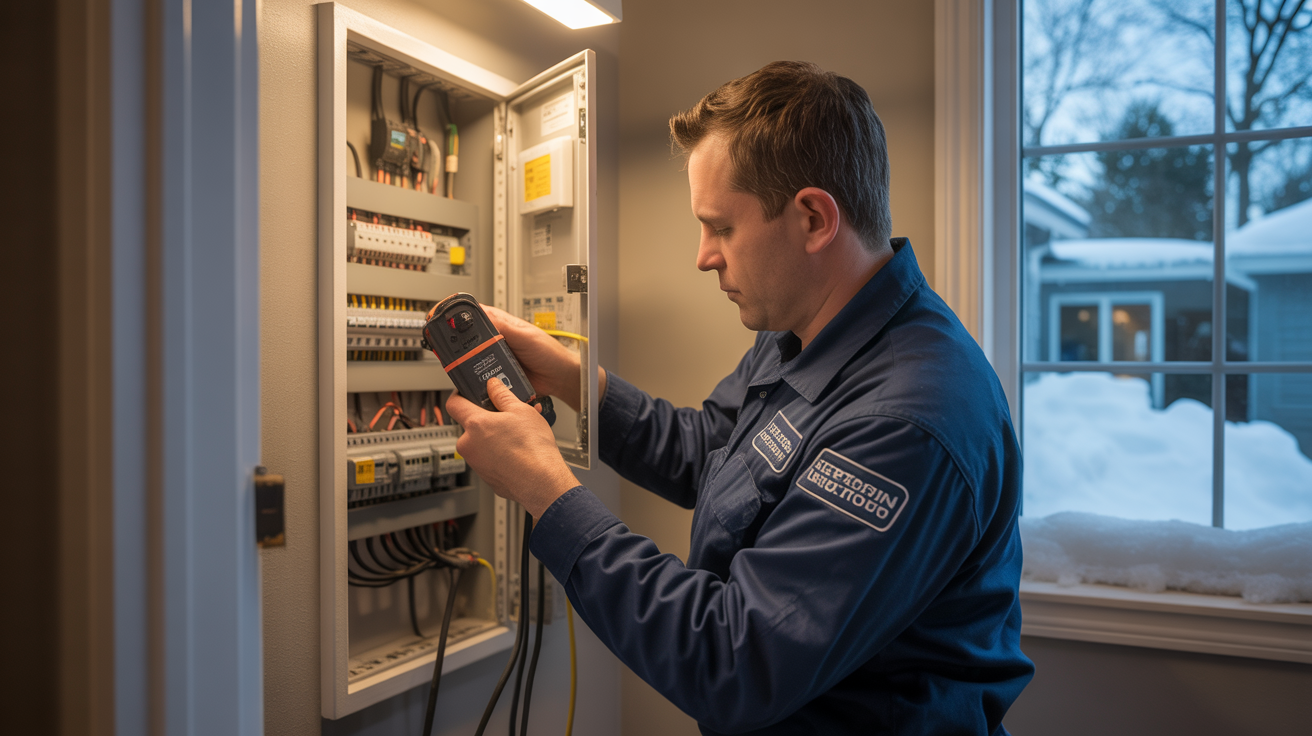
Your electrical panel is the heart of your home's electrical system, and winter is an excellent time to give it a thorough inspection. Start by opening your panel door and looking for any signs of trouble. Are there any scorch marks, rust, or corrosion? Do you smell any burning odors or notice any warm spots? These are all red flags that require immediate professional attention.
Check that all circuits are properly labeled. If you're not sure which breaker controls which area of your home, now is the time to create or update that information. This knowledge becomes invaluable during an electrical emergency or when you need to shut off power to a specific area.
Pay attention to how your electrical system behaves during normal use. Do lights flicker when you turn on the furnace or space heater? Do circuit breakers trip frequently, especially when running multiple appliances? These symptoms often indicate that your electrical panel is undersized for your home's current needs—a common issue in older Sheboygan County homes that may have been built before modern electrical demands existed.
If your home still has a fuse box rather than a modern circuit breaker panel, or if your panel is more than 25 years old, it's worth having a licensed electrician evaluate whether an electrical panel upgrade would improve both safety and functionality. Modern panels offer better protection against electrical hazards and can accommodate the increased electrical demands of contemporary living, including EV chargers and smart home systems.
### 2. Test Smoke and Carbon Monoxide Detectors
Wisconsin winters mean closed windows and doors, which makes working smoke and carbon monoxide detectors absolutely essential. These devices are your first line of defense against two of the most dangerous threats to your family's safety, and they deserve monthly attention—not just a quick check once a year.
Test each smoke detector by pressing the test button and ensuring you hear a loud, clear alarm. If the sound is weak or nonexistent, replace the batteries immediately. Even hardwired smoke detectors have backup batteries that need regular replacement. As a general rule, replace batteries at least once a year, and replace the entire smoke detector unit every 10 years.
Carbon monoxide detectors are equally critical during winter months when heating systems run continuously. Carbon monoxide is an odorless, colorless gas that can be deadly, and it's produced by any fuel-burning appliance, including furnaces, water heaters, and even gas fireplaces. Test your CO detectors monthly and replace them according to the manufacturer's recommendations, typically every 5-7 years.
Proper placement matters too. Install smoke detectors on every level of your home, inside each bedroom, and outside sleeping areas. Carbon monoxide detectors should be placed near sleeping areas and on every level of your home. For Sheboygan County homeowners participating in the Wisconsin Winter Protection Plan, maintaining working smoke and carbon monoxide detectors is not just a safety measure—it's often a requirement for continued participation in utility assistance programs.
### 3. Space Heater Safety
Space heaters are a common sight in Wisconsin homes during winter, providing supplemental heat to chilly rooms or allowing you to lower your thermostat to save on heating costs. However, space heaters are also one of the leading causes of winter fires, and most of these fires are entirely preventable with proper use and precautions.
First and foremost, never plug a space heater into an extension cord or power strip. Space heaters draw significant current—typically 1,500 watts—and extension cords are not designed to handle this continuous high load. The result can be overheating, melted insulation, and fire. Always plug space heaters directly into wall outlets, and ideally into outlets on dedicated circuits.
Maintain at least three feet of clearance around your space heater in all directions. This means keeping it away from curtains, furniture, bedding, papers, and anything else that could catch fire. Never leave a space heater running unattended, and always turn it off before going to bed or leaving the room.
Choose space heaters with modern safety features, including automatic shut-off if the unit tips over, overheat protection, and a cool-touch exterior. If you're using an older space heater, consider upgrading to a newer model with these essential safety features.
If you find yourself relying heavily on space heaters throughout your Sheboygan or Plymouth home, it might be a sign that your heating system isn't adequate or that your home has insulation issues. It could also indicate that your electrical system needs an upgrade to safely handle the additional load. A consultation with a licensed electrician can help you determine the best solution for your specific situation.
### 4. Check Outdoor Electrical Systems
Your outdoor electrical systems face unique challenges during Wisconsin winters. Snow, ice, freezing rain, and temperature fluctuations can all impact the safety and functionality of outdoor outlets, lighting, and connections.
Start by testing all outdoor GFCI (Ground Fault Circuit Interrupter) outlets. These special outlets are designed to shut off power immediately if they detect a ground fault, protecting you from electrical shock. Press the "test" button on each GFCI outlet—the power should cut off immediately. Then press "reset" to restore power. If the outlet doesn't trip when you press test, or if it won't reset, it needs to be replaced by a qualified electrician.
Inspect all outdoor outlet covers to ensure they're weatherproof and in good condition. Even "weatherproof" covers can crack or deteriorate over time, allowing moisture to enter the outlet box. If you're using outdoor outlets for holiday lighting or other winter applications, make sure you're using covers designed for "in-use" protection that can close over plugs and cords.
When it comes to holiday lighting, inspect every strand before hanging it. Look for frayed wires, broken sockets, or damaged plugs. If you find any damage, don't try to repair it—replace the entire strand. Use outdoor-rated extension cords for outdoor applications, and never exceed the manufacturer's recommendations for connecting multiple light strands together.
Be mindful of snow and ice accumulation around outdoor electrical equipment, including your electrical meter and any outdoor outlets or junction boxes. While you should never attempt to clear snow from your electrical meter yourself, you can gently remove snow from around outlet boxes and ensure that melting snow has a path to drain away from electrical equipment.
### 5. Inspect Indoor Wiring and Outlets
Your home's indoor electrical system deserves attention too, especially before winter's increased electrical demands begin. Walk through your home and inspect outlets, switches, and visible wiring for any signs of trouble.
Touch your outlets and light switches during normal use. They should never feel warm or hot to the touch. A warm outlet or switch indicates that something is wrong—possibly a loose connection, an overloaded circuit, or deteriorating wiring. This is not a DIY fix; call a licensed electrician to investigate and resolve the issue before it becomes a fire hazard.
Look for any discoloration around outlets or switches, which can indicate arcing or overheating. Check that all outlet and switch cover plates are in place and not cracked or damaged. Inspect visible electrical cords for any signs of damage, including fraying, cracking, or exposed wires. Damaged cords should be replaced immediately—never attempt to repair them with electrical tape.
Pay special attention to how you're using outlets throughout your home. Are you relying on power strips or extension cords to provide enough outlets in a room? This often indicates that you don't have enough outlets for your needs, which can lead to overloading. Consider having additional outlets installed by a professional electrician rather than daisy-chaining power strips together.
Be especially cautious about overloading outlets in older Sheboygan County homes. Many homes built before 1980 have electrical systems designed for far fewer electrical devices than we use today. What was adequate for a few lamps and a television is often insufficient for today's computers, charging stations, entertainment systems, and smart home devices.
## Signs You Need a Professional Electrical Inspection
While this checklist covers many important safety checks you can perform yourself, some situations require the expertise of a licensed electrician. Recognizing when to call in a professional can prevent minor issues from becoming major hazards.
If you notice lights that flicker or dim, especially when you turn on major appliances like your furnace, air conditioner, or space heaters, this often indicates an overloaded circuit or a problem with your electrical panel. Similarly, if you experience frequent circuit breaker trips, your electrical system is telling you that it's being pushed beyond its capacity.
Any burning smell near outlets, switches, or your electrical panel requires immediate professional attention. Don't wait to investigate—shut off power to the affected area if you can do so safely, and call an electrician right away. The same goes for any sparking from outlets or switches, buzzing sounds from your electrical panel, or outlets that don't work at all.
If your home is 25 years or older and hasn't had an electrical system update, it's wise to schedule a comprehensive electrical inspection. Electrical systems don't last forever, and components that were installed decades ago may no longer meet current safety standards or be adequate for modern electrical demands. This is particularly important if you're planning any major changes, such as adding an EV charger, installing a home generator, or undertaking a major renovation.
Homes with aluminum wiring (common in homes built between 1965 and 1973) require special attention and periodic inspection by electricians familiar with aluminum wiring issues. If you're not sure what type of wiring your Sheboygan County home has, a professional electrical inspection can provide that information along with recommendations for any necessary updates.
## Couillard Electric: Your Trusted Sheboygan County Electrical Safety Partner
At Couillard Electric, we understand that your home's electrical safety isn't just about convenience—it's about protecting your family and your most valuable investment. Our team of licensed, experienced electricians has been serving Sheboygan County homeowners for years, providing comprehensive electrical services from routine safety inspections to complete panel upgrades and emergency repairs.
We're proud to serve communities throughout the region, including Sheboygan, Kohler, Plymouth, Mequon, Port Washington, Grafton, and Cedarburg. Whether you need a thorough electrical safety inspection, are considering an electrical panel upgrade to meet modern demands, or require emergency electrical services, our team is ready to help.
Our commitment goes beyond just fixing problems—we believe in educating homeowners about electrical safety and helping you make informed decisions about your home's electrical system. We take the time to explain what we find, answer your questions, and provide clear recommendations prioritized by safety and your budget.
Winter in Wisconsin is challenging enough without worrying about your home's electrical safety. Let Couillard Electric give you the peace of mind that comes from knowing your electrical system is safe, reliable, and ready to handle whatever winter brings.
## Don't Wait for an Emergency—Schedule Your Winter Electrical Safety Inspection Today
The best time to address electrical safety concerns is before they become emergencies. As winter settles in across Sheboygan County, take the proactive step of scheduling a comprehensive electrical safety inspection with Couillard Electric. Our thorough inspections identify potential hazards, ensure your system can handle winter's demands, and provide you with the peace of mind that your family deserves.
Contact Couillard Electric today to schedule your winter electrical safety inspection. We offer flexible scheduling to accommodate your busy life, and our emergency services are available when you need them most. Don't let electrical concerns keep you up at night this winter—let the trusted professionals at Couillard Electric ensure your home is safe, warm, and ready for the season ahead.
**Call us today or visit our website to schedule your electrical safety inspection. Your family's safety is our top priority.**
Need Electrical Services?
Couillard Electric serves Sheboygan County and surrounding areas with professional electrical services. Contact us today for a free estimate.